Extraction d'archives
Les fichiers d'archives contiennent souvent plusieurs couches de contenu compressé destinées à contourner les outils traditionnels d'
s de sécurité. La fonctionnalité d'extraction OPSWAT décompresse les archives en toute sécurité et soumet chaque fichier à une analyse approfondie.
- Extraction récursive d'archives
- Détection des « bombe d'archives »
- Prévention de la corruption des données
OPSWAT bénéficie de la confiance de
























d'extraction récursive jusqu'à une profondeur configurable
160+
Formats d'archivage pris en charge :
Extraction en un seul passage
Sur tous les moteurs
Détection et confinement des bombes d'archives
Prise en charge des archives cryptées et protégées par mot de passe
Les pirates exploitent la structure des archives
Les couches imbriquées, les en-têtes mal formés et les archives concaténées déjouent les scanners qui se contentent d'examiner la surface d'un fichier .
e avant de le déclarer sûr.


Menaces intégrées
Le simple fait d'analyser une archive dans son ensemble ne permet pas de révéler son contenu. Les pirates ont recours à des couches imbriquées, à des fichiers ZIP concaténés, à des conteneurs auto-extractibles et à des fichiers polyglottes pour s'assurer que les analyseurs s'arrêtent avant d'atteindre la charge utile. Sans une extraction préalable à l'analyse, les moteurs de détection n'examinent jamais la menace réelle.


Archives cryptées
Les archives protégées par mot de passe sont illisibles pour la plupart des outils de sécurité sans ce mot de passe. Des campagnes en cours continuent de diffuser des ransomwares et des logiciels d'espionnage de cette manière, le mot de passe étant envoyé par un canal distinct afin d'éviter toute corrélation.


Archives mal formées et trop volumineuses
Les archives n'ont pas besoin de contenir de charge utile pour causer des dommages. Les bombes de décompression épuisent les ressources du processeur, de la mémoire et du disque dur, ce qui bloque ou provoque le plantage des processus d'analyse, laissant ainsi une brèche permettant à d'autres menaces de passer inaperçues. Les archives profondément imbriquées produisent le même effet lorsqu'aucune limite n'est imposée quant à la profondeur de récursion, au nombre de fichiers ou à la taille des fichiers extraits.
Extraction d'archives cohérente et évolutive
Le moteur d'extraction d'archives centralise le décompressage des fichiers compressés et des formats de conteneurs, garantissant ainsi que chaque fichier qu'ils contiennent soit mis en évidence et soumis à une analyse approfondie avant d'être traité par d'autres moteurs d'analyse.
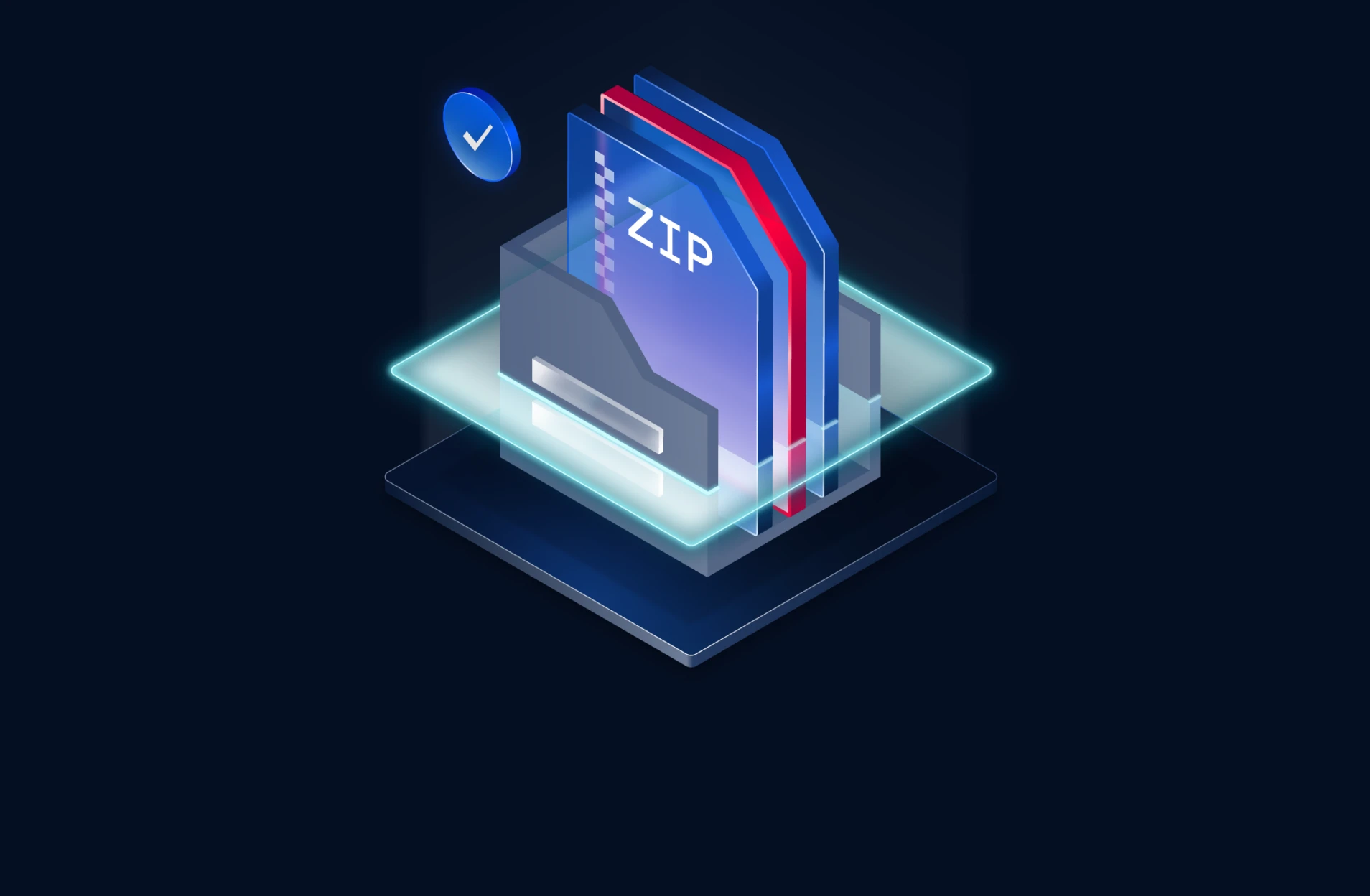
Extraire tous les fichiers avant le lancement de l'analyse
Le moteur décompresse les archives de manière récursive, en suivant les niveaux imbriqués pour mettre en évidence les fichiers enfants que l'analyse superficielle n'atteint jamais. Chaque fichier extrait est ensuite acheminé vers les moteurs en aval.
Gérer les archives chiffrées sans bloquer les opérations
Les archives chiffrées et protégées par mot de passe sont traitées selon des règles d'extraction configurables, ce qui permet aux équipes de sécurité d'assurer une couverture complète de l'inspection sans avoir à recourir à des décisions générales d'autorisation ou de blocage qui perturbent les flux de travail. Le traitement des archives s'effectue une seule fois par type de fichier, garantissant ainsi que les formats chiffrés bénéficient d'un traitement cohérent sur tous les moteurs, au lieu d'être ignorés par ceux qui ne prennent pas en charge le déchiffrement en natif.

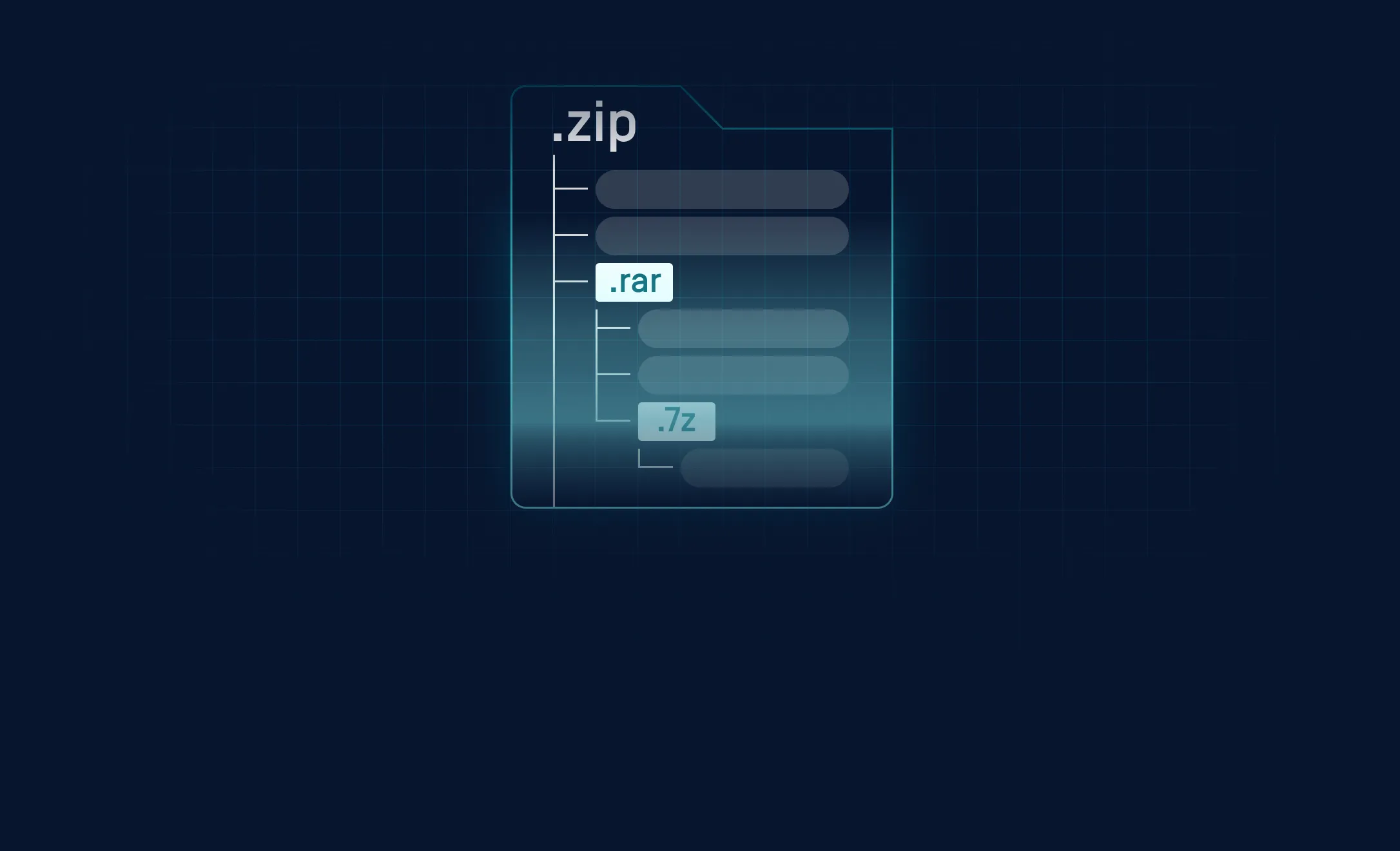
Appliquer des restrictions visant à protéger l'infrastructure de numérisation
Des paramètres configurables concernant la profondeur de récursion, le nombre de fichiers et la taille totale des fichiers extraits permettent d'éviter que des « bombes de décompression » ou des charges utiles trop volumineuses n'épuisent les ressources du système. Les administrateurs définissent précisément à quel moment l'extraction doit s'arrêter, trouvant ainsi un équilibre entre l'exhaustivité et la stabilité du pipeline pour tous les types d'archives.
Déballage en profondeur, visibilité totale, amélioration de l'inspection de l'
Le moteur d'extraction d'archives utilise des analyseurs syntaxiques optimisés pour extraire des fichiers, harmoniser la logique d'extraction et s'intégrer aux flux de travail de numérisation et de contrôle des modifications (CDR).
 ÉTAPE 1
Identifier avant l'extraction
Vérifie chaque archive à l'aide de la signature réelle du fichier, et non de l'extension déclarée, garantissant ainsi que les conteneurs dissimulés ou renommés soient correctement identifiés avant le début de l'extraction.
- ÉTAPE 2
Extraire le fichier de manière récursive
Décompresse chaque niveau imbriqué jusqu'aux limites de profondeur configurables, en effectuant une extraction par type d'archive et en partageant les résultats entre tous les moteurs en aval afin d'éliminer les traitements redondants.
- ÉTAPE 3
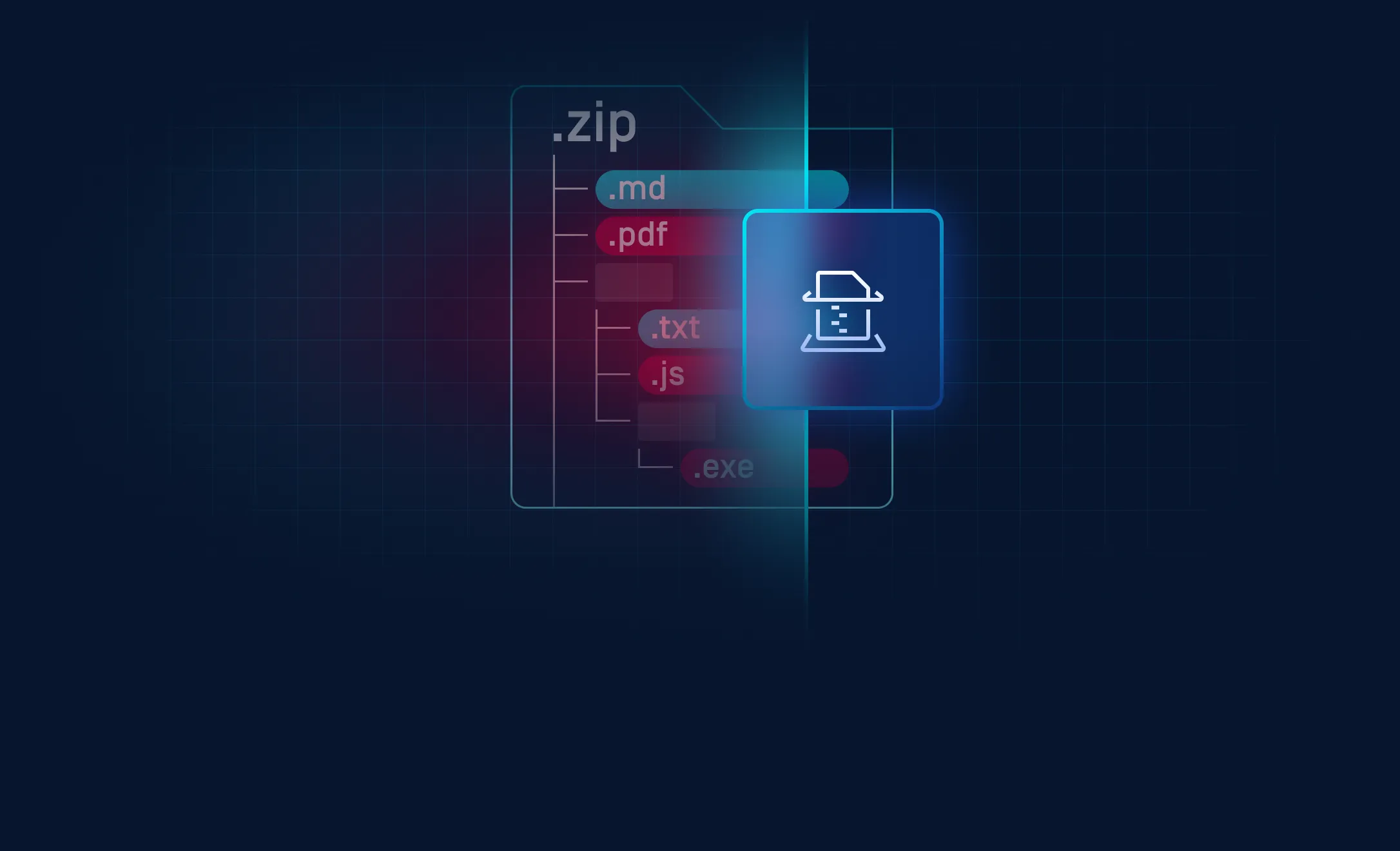
Analyse approfondie des fichiers extraits
Chaque fichier extrait est soumis individuellement à l'ensemble complet de solutions MetaDefender en tant qu'objet autonome, et non comme partie intégrante d'un conteneur opaque.

Principales caractéristiques et avantages
Extraction récursive d'archives
Extrait automatiquement plusieurs niveaux imbriqués pour mettre au jour les fichiers cachés au plus profond de structures d'archives complexes, que l'analyse en un seul passage ne parvient jamais à atteindre. Aucun niveau d'imbrication ne peut ainsi servir de cachette sûre à des charges utiles malveillantes.
Extraction en un seul passage sur tous les moteurs
Le traitement des archives s'effectue une seule fois par type de fichier et les données extraites sont partagées entre tous les moteurs d'analyse en aval, ce qui évite tout décompressage redondant. Le traitement est ainsi plus rapide et les résultats restent cohérents, quel que soit le nombre de moteurs déployés.
Limites d'extraction configurables
Les administrateurs définissent des limites explicites concernant la profondeur de récursion, le nombre maximal de fichiers extraits et la taille totale non compressée par flux de travail. Les « bombes de décompression » et les archives trop volumineuses sont ainsi maîtrisées avant qu'elles n'épuisent les ressources du système ou ne bloquent les pipelines d'analyse.
Options de déploiement

Sur place
Intégrez-le à votre infrastructure de sécurité existante pour bénéficier d'un contrôle total et de possibilités de personnalisation.

Cloud
Utilisez le traitement dans le cloud pour étendre l'analyse des archives à des environnements distribués.

Hybride
Combinez les déploiements sur site et dans le cloud pour optimiser les performances et la couverture de sécurité.
Ressources

La différence entre le moteur d'extraction Archive Extraction Engine et le moteur d'extraction de Metascan Antivirus
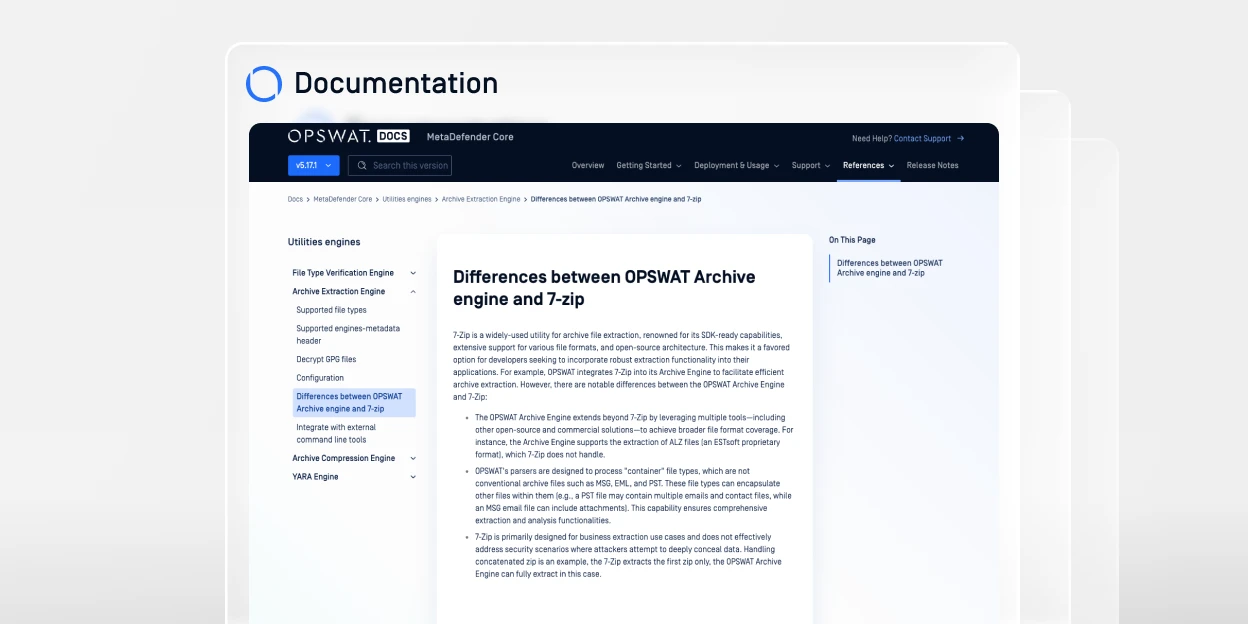
Différences entre le moteur OPSWAT et 7-Zip

